Star Sports 3 and FanCode are carrying Lanka Premier League 2026 for India, with fixed 3:00 p.m. and 7:30 p.m. IST starts, early Galle momentum, and a final set for August 8 in Colombo.
· Trust11 News Desk · Reporting based on Yahoo Sports / The Sporting News
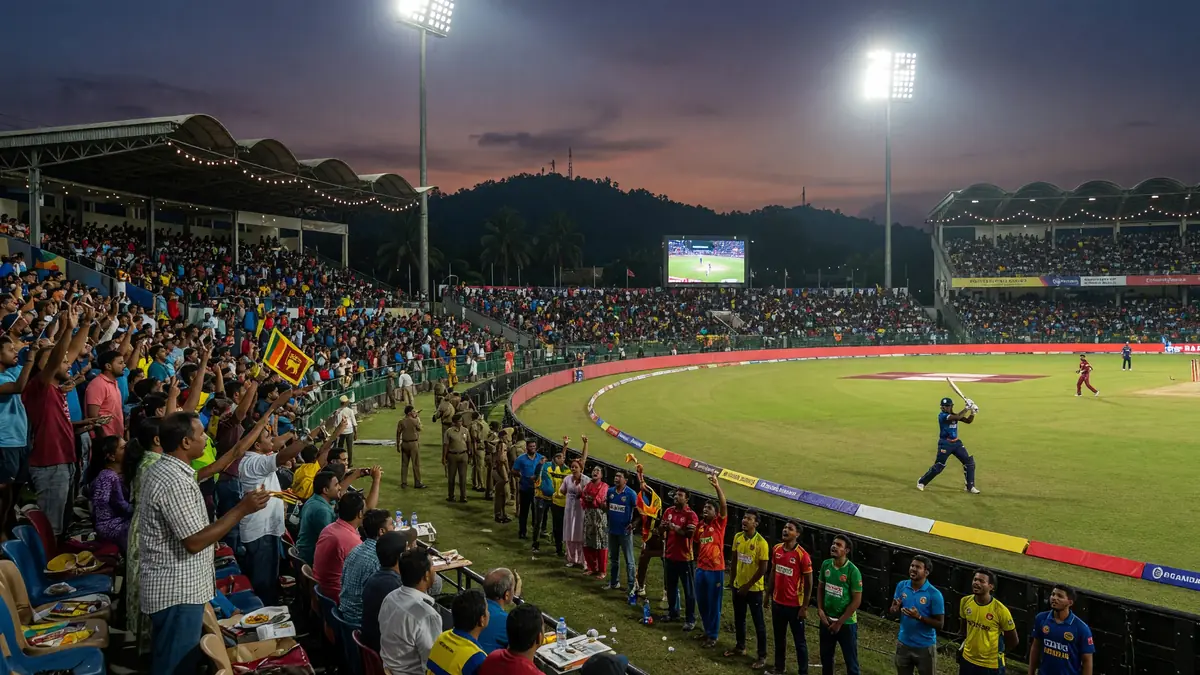
The sixth Lanka Premier League is already under way in Sri Lanka, and Indian audiences have a clear path to every ball. Coverage sits on Star Sports 3 for linear TV and on FanCode for live streaming, with afternoon games locked at 3:00 p.m. IST and night games at 7:30 p.m. IST through an August 8 final at R Premadasa Stadium.
Opening night on July 17 replayed a familiar final pairing: defending champions Jaffna Kings against Galle Gallants at the Sinhalese Sports Club in Colombo. Galle took that match by 36 runs and followed it with a second win, while Colombo Kaps and Dambulla Sixers each have one victory on the early ledger. Five franchises will contest 24 matches across four venues before the playoff cluster returns to Colombo.
For readers who treat overseas T20 leagues as form signals ahead of domestic fantasy windows, the LPL window is short, dense and easy to schedule around two fixed Indian start times. Below is a practical breakdown of rights, teams, early results, venue travel and the playoff ladder — written for people watching from India rather than as a generic tournament brochure.
Star Sports holds the Indian broadcast rights for this edition. Match coverage is listed on Star Sports 3. Households that already take a Star Sports pack for domestic cricket should find LPL in the same channel group they use for other overseas franchise nights.
Live streaming for India runs through the FanCode app and website. That split — Star Sports 3 on television, FanCode on mobile and desktop — is the combination most Indian viewers will use across the three-week stretch. If a match is moved for weather or a doubleheader runs long, those two outlets remain the first place to confirm a revised toss or start.
Start times stay simple for Indian clocks. Afternoon fixtures begin at 3:00 p.m. IST. Evening fixtures begin at 7:30 p.m. IST. Qualifier 1 on August 5 is scheduled for the afternoon slot, with the Eliminator the same evening. The final on August 8 is listed for 7:30 p.m. IST. Building a personal calendar around those two daily anchors is enough for most viewers; there is no separate late-night window in the published plan.
Anyone who follows Trust11 cricket news for overseas T20 form can treat those two daily slots as the check-in rhythm for score updates, impact-sub usage and under-23 minutes across the league stage.
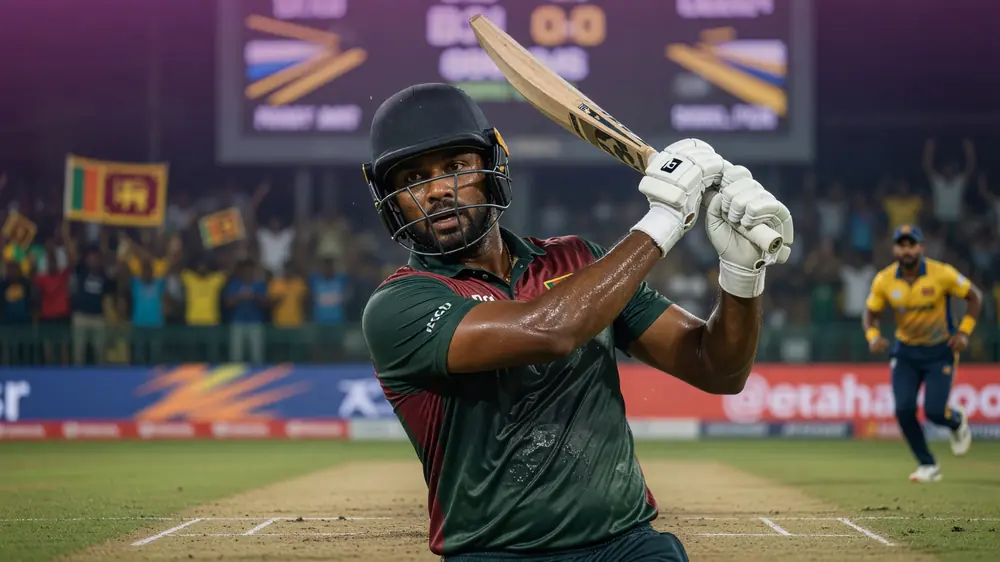
The field is unchanged in size from recent seasons: five city or regional sides. Jaffna Kings (Jaffna), Galle Gallants (Galle), Colombo Kaps (Colombo), Kandy Royals (Kandy) and Dambulla Sixers (Dambulla) make up the group. Jaffna remain the historical power, with four titles from the previous five editions, which is why the opening assignment against Galle carried extra weight beyond a routine league fixture.
Early results have already dented the idea of a one-team parade. Galle Gallants won both of their first two games, including that 36-run win over Jaffna on night one. Colombo Kaps and Dambulla Sixers sit on one win each. That spread matters for viewers who only catch selected matches: Galle’s start is the on-field story worth prioritising on the remote until the middle of the league stage reshuffles the table.
Franchise T20 leagues reward continuity of role more than logo loyalty. Jaffna’s past success does not lock this year’s points table, and Galle’s opening burst does not guarantee a top-two finish. What the early sample does provide is a short list of sides whose batting order and death bowling are worth watching live rather than only in highlights packages.
Organisers added two playing conditions that Indian audiences will recognise from other franchise products. Teams may use an impact substitute. Separately, every playing XI must include at least one under-23 Sri Lankan cricketer for the full match, not merely as a paper selection who leaves after a few overs of fielding.
The impact substitute softens the cost of a misfiring top-order pick or a bowler who loses a spell early. Captains can reshape the side mid-game rather than living with a rigid eleven. For viewers, that means toss graphics and the first drinks break both deserve attention: the first tells you the original balance, the second often reveals whether the impact seat has been burned.
The under-23 mandate is a development rule with broadcast consequences. Young local players will appear in meaningful phases, not only as twelfth-man runners. Highlight packages that skip everything except overseas finishers will miss part of the actual contest. Full-match streams on FanCode are the cleaner way to judge those younger names if you care about future overseas signings and domestic pipelines.
The league stage is a double round-robin. Each side meets every other side twice across twenty matches. The top four advance. Playoffs follow a familiar ladder: Qualifier 1 between first and second, an Eliminator between third and fourth, Qualifier 2 between the Qualifier 1 loser and the Eliminator winner, and a final.
That structure protects the top two with a second life and forces third and fourth to win on the night. For Indian viewers planning which days to block, the decisive cluster is compact: league cricket ends August 2 in Pallekele, Qualifier 1 and the Eliminator land together on August 5 at R Premadasa Stadium, Qualifier 2 follows on August 7 at the same ground, and the final is August 8, also at R Premadasa, at 7:30 p.m. IST.
August 5 is the densest broadcast day. Qualifier 1 is listed for 3:00 p.m. IST and the Eliminator for 7:30 p.m. IST. A single afternoon-to-evening stretch decides two playoff berths’ immediate fate and sets Qualifier 2. If you only watch three LPL sessions all season, that doubleheader plus the final is the efficient set.
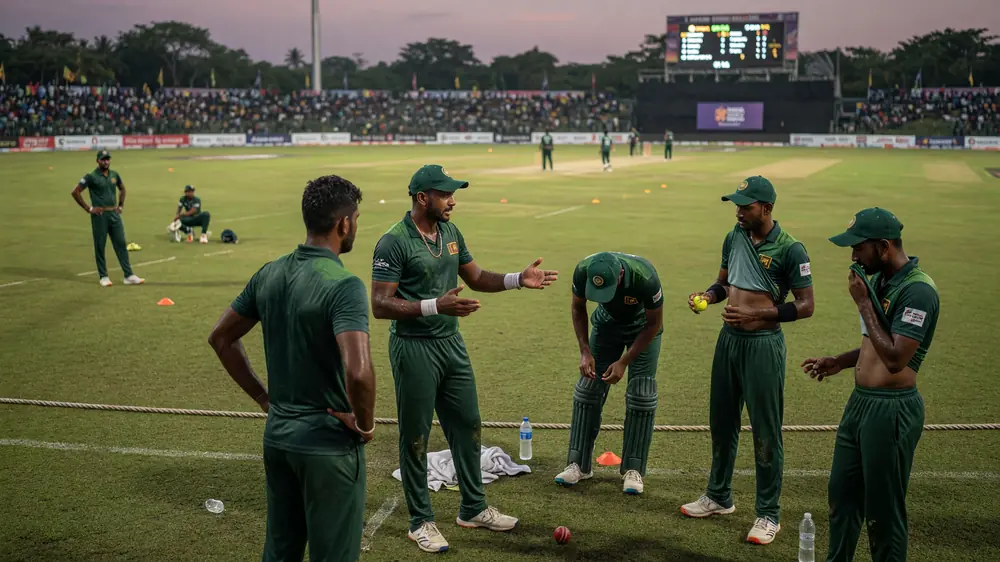
The competition does not stay in one city. The opening five matches were staged at the Sinhalese Sports Club in Colombo. The caravan then moves through Dambulla and Pallekele for the balance of the league stage. All four playoff fixtures return to Colombo at R Premadasa Stadium.
Surface and square dimensions change with that travel. SSC in the first week offered a familiar Colombo look for the season launch. Dambulla and Pallekele often play differently for spin and for dew once the evening slot arrives. Premadasa under lights for the final four games should feel closest to the big-event atmosphere Indian viewers associate with bilateral and ICC nights in Colombo.
From a viewing plan, the venue path is also a fatigue map. Sides that travel well through the middle week may peak at the right time for the Premadasa cluster, while early leaders who fade on slower middle-stage pitches can still recover if they hold a top-two cushion into Qualifier 1. Table position on August 2 matters more than any single July headline.
Those five markers frame the whole product. Everything between July 17 and August 2 is seeding. Everything from August 5 to August 8 is elimination cricket in one city on one primary broadcast stack for India.
Galle’s 2-0 start, including a 36-run win over four-time champions Jaffna, is the cleanest early signal. It does not end Jaffna’s season. It does force neutral viewers to treat Galle as must-watch rather than as a supporting act. Colombo Kaps and Dambulla Sixers each owning a win keeps the middle of the table honest; neither side is stuck in a winless hole that would make their remaining league games low priority.
Sample size is still small relative to a twenty-match league stage. Bowling units that thrived at SSC may look different once the competition spends nights in Dambulla and Pallekele. Batting orders that leaned on one overseas finisher can be exposed when the impact substitute and match-ups flip. The responsible way to watch is to update your mental tier list every three or four games, not after a single highlight package.
Jaffna’s historical edge still matters for narrative and for how opponents set fields, but titles from prior editions do not add points in 2026. The useful question through the next fortnight is whether Galle can convert the opening burst into a top-two finish that earns the Qualifier 1 safety net.
First, confirm the outlet before toss. Star Sports 3 is the linear home; FanCode is the streaming home. If one feed buffers, the other is the failover rather than an unofficial mirror.
Second, respect the two clocks. A 3:00 p.m. IST start fits a late lunch window. A 7:30 p.m. IST start fits a prime-time sit-down. Mixing them up is the most common way people miss the powerplay.
Third, on August 5, plan for a doubleheader day if you care about playoff shape. Qualifier 1 in the afternoon sets one finalist path; the Eliminator at night keeps third and fourth alive or sends one side home.
Fourth, watch for the impact substitute and the under-23 presence in the XI graphic. Those two rules are not footnotes. They change bowling changes, batting depth and which local names get real overs.
Fifth, treat the Premadasa final four as a mini-tournament. League form still matters for seeding, but knockout nights compress roles. Death overs and middle-over spin usually decide more than group-stage net run rate debates.
Overseas franchise leagues are scouting tapes as much as entertainment. Indian viewers who track T20 roles — powerplay openers, fourth-over spin, death specialists, impact-sub patterns — get a concentrated look at Sri Lankan pathways and visiting overseas pros in a short window before attention swings back to domestic calendars.
The under-23 rule accelerates that scouting value. Names who hold their place through Pallekele nights and then appear again at Premadasa are more credible than cameo selections in dead rubbers. FanCode’s full streams make it easier to judge strike rates against match situation rather than against isolated six-hitting clips.
None of that requires treating every league game as appointment television. A selective plan — Galle’s next few outings, any Jaffna recovery stretch, the August 5 doubleheader, and the August 8 final — covers the competitive spine without demanding twenty full evenings.
Through the remainder of the league stage, three threads dominate. Can Galle Gallants keep winning enough to lock a top-two berth? How quickly do Jaffna Kings stabilise after the opening loss? Which of Colombo Kaps, Kandy Royals and Dambulla Sixers builds a consistent middle-order pattern once the venue tour leaves SSC behind?
Bowling workloads also deserve a quiet eye. Impact substitutes encourage aggressive early spells because a struggling bowler can be sheltered later. That can produce short-burst wicket hauls that look enormous in isolation. Context from the full innings still matters before anyone rewrites a player hierarchy off a single spell in Colombo humidity.
By August 2 in Pallekele the seeding should be clear enough to handicap Qualifier 1. From that point the story stops being about depth of roster and becomes about which four sides handle Premadasa nights.
Confirm Star Sports 3 for television and FanCode for streaming. Expect 3:00 p.m. IST or 7:30 p.m. IST unless a rain rewrite is announced on those same outlets. Keep August 5 free if you want both playoff day games, and treat August 8 at 7:30 p.m. IST as the season’s last appointment.
On the field, track Galle’s attempt to stay clear, Jaffna’s response as four-time champions under early pressure, and the under-23 and impact-sub patterns that will decide several middle overs before the final even arrives. The sixth LPL is compact enough that a disciplined viewing plan beats trying to watch everything and remembering nothing.
