A 2019 World Cup retrospective on the CricTracker Dream11 captaincy brief for India vs Sri Lanka at Headingley, with the small-league and grand-league splits broken down by Rohit Sharma, Virat Kohli, Avishka Fernando, Hardik Pandya and Mohammed Shami's tournament numbers.
· Trust11 News Desk · Retrospective on CricTracker, 5 July 2019
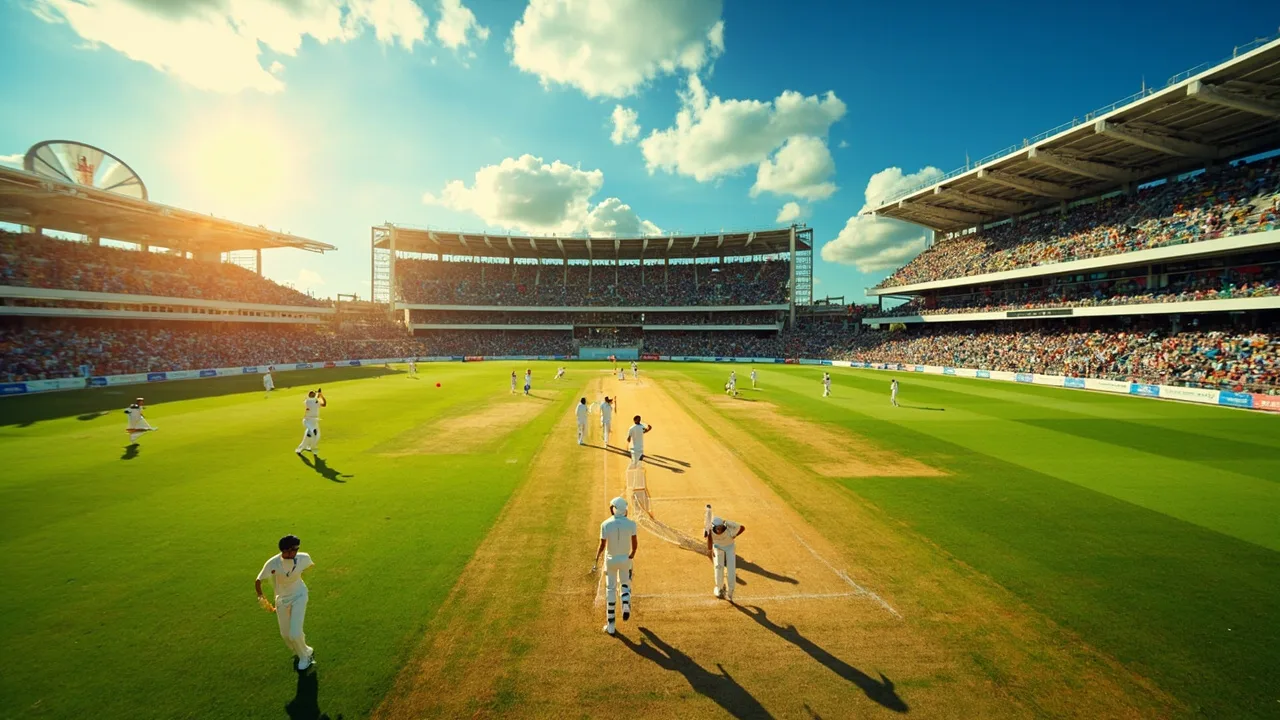
On 6 July 2019, India walked into the World Cup fixture against Sri Lanka at Headingley already holding a semi-final place in one hand. The clinching win had come a few days earlier, against Bangladesh at Edgbaston, by 28 runs, and the points table had India in the top four with the knockout bracket already pencilled in. The Leeds leg of the calendar was, in numerical terms, a dead rubber. In every other sense — bilateral momentum, Net Run Rate, World Cup squad rhythm, and the captaincy debate on every fantasy users' phone — it was anything but.
The match was officially ICC World Cup 2019 Match 44, the eleventh and final group fixture for both teams. Sri Lanka had been long eliminated; India had been long qualified. The cricket that remained was about rhythm, about combinations, and about the small audit each fantasy user runs in the back of their mind whenever a roster is finalised: who, in this XI, deserves the captain's armband and who deserves the vice-captain's multiplier? CricTracker's Dream11 captaincy guide for the fixture came out the day before the toss, and it sketched one of the cleaner small-league versus grand-league splits of the 2019 tournament.
The captaincy question is the single most leveraged decision in any Dream11 lineup. Whatever the platform's underlying points system, the captain's score is multiplied by two and the vice-captain's by one-and-a-half. On a 350-point fantasy total, swapping the captain and a non-captain can swing the score by 80 to 120 points. That swing is larger than the difference between the day's best batting display and the day's worst. The choice is not who plays well; it is who plays well and gets the multiplier. Two players can both score 80 runs, but only one of them becomes 160 fantasy points if the captaincy tag is on his name.
Headingley in early July is not a generic English ODI surface. It is a morning start, a used-looking wicket by the second innings, a square boundary that does not always reward the aerial route, and a square-of-the-wicket gap that punishes anything on the legs. The 2019 World Cup matches there produced three results that fantasy users should remember: the run-scoring was competitive but not extravagant, the bowler who held his line through the middle session tended to win the spell, and the toss mattered more than the scorecard predicted.
In a fixture of that shape, the captaincy calculation shifts. A flat-track captain on a 350-run wicket can be a top-order batter; a Headingley captain benefits from being someone whose role does not depend on the ball coming onto the bat. That is the lens CricTracker used, and it is the lens reproduced below — the leading run-scorer of the tournament, the second-leading run-scorer of the tournament, and one carefully chosen differential on the other side of the contest.
For high-entry small leagues, where the goal is to clear the cut-off and not to win outright, the safer captaincy call was Rohit Sharma. He had scored 544 runs in seven matches at an average of 90.66, with four centuries and one fifty. Only one man in the tournament's entire history had opened with that combination of volume and conversion at that stage of a World Cup. The captaincy case for Rohit was not "he might score 100". It was "he has been scoring 100", and the multiplier on a third or fourth hundred is the safest doubling a fantasy user can buy.
The vice-captaincy, in the same small-league frame, was Virat Kohli. Kohli had scored 408 runs in seven matches at an average of 58.28, with five fifties. On a deck that might tighten in the second innings, the India captain's tolerance for a long lunch-and-tea partnership was the most reliable source of incremental points. A safe double of Rohit and Kohli was the right small-league multiplier: two of the four top run-scorers of the tournament, both in Indian colours, both opening the batting or coming in at three, both with the role security that Headingley demanded.

Grand leagues work on a different arithmetic. The cut-off is irrelevant; the rank is everything, and rank is decided by how many users you finish ahead of. A captaincy call that is on 60% of entry slips is functionally equivalent to a captaincy call that is on 5% of entry slips — both can be the right answer, but only the latter can climb a 25,000-entry mega league. CricTracker's grand-league split, in that sense, was the textbook contrarian play: promote Kohli to the captain's tag and bring in Avishka Fernando as the vice-captain differential.
Fernando's case at the time of selection was unusually strong for a 21-year-old in only his third World Cup outing. He had made 183 runs in three matches at an average of 61, capped by a maiden international century against the West Indies. The number looked small next to Rohit's 544, but the rank distribution was the point. On a Headingley wicket, if Fernando produced one more innings of consequence, the multiplier on his 1.5x vice-captain slot would seal a top 1% finish for everyone who picked him — and almost no one in a public mega league would have.
The Kohli captaincy leg of the recommendation was simply the safer of the two options kept on the field. Cutting him to vice-captain was a waste of his consistency; promoting him to the captain's tag turned his likely 60-80 points into a 120-160 ceiling for the same scenario. The grand-league trade was not Kohli or Fernando; it was Kohli and Fernando, with the multipliers tilted towards the differential.
Neither CricTracker captaincy call put the captaincy tag on Hardik Pandya, but his slot on the team sheet was the more interesting tactical argument of the brief. Pandya had scored 187 runs at a strike rate of 138.51 and taken eight wickets in seven matches. That is a dual role in a World Cup match, and Headingley was the kind of fixture where the dual role paid off: one bowler's quota of four overs, plus a 25-to-30-ball batting cameo at number six or seven, could comfortably yield 50 to 90 fantasy points before the multiplier was even applied.
Pandya's case for the vice-captain tag was real but rarely chosen. The risk profile was different from a top-order certainty. His batting points came in compressed bursts; his bowling points came in clusters of three or four. A wicketless Powerplay could push his score into the 30s; a three-wicket middle session could push it into the 110s. The expected value justified inclusion, but the variance made the captain's tag too exposed. Slot him in, captain someone else, accept the 1x multiplier, and use the captaincy tag on the highest-floor batter in the XI.
Shami was the only bowler in the CricTracker shortlist, and the brief was explicit about why. He had taken 14 wickets in four matches at an average of 13.78, which was the quietest wicket-taking rate of the tournament at that point. The strike-rate of the spell was unusual: in a tournament where most frontline quicks were going at 45-plus, Shami was sitting at a bowling average below 14.
Headingley was a seam-friendly surface in the morning, and the Sri Lanka batting order had question marks against the new ball. Shami's points, however, were binary. A 10-over quota with the new ball might fetch 25 points for three maidens and a wicket, or 80 points for a four-wicket burst. The captaincy risk on a bowler is that the upside is real but the floor is low. The brief kept him out of the captain and vice-captain slots for that reason, while leaving him as a strong pick in the rest of the XI.
Two Sri Lanka names were in the CricTracker conversation. Kusal Perera had scored 255 runs in six matches at an average of 42.50 and a strike rate of 109.91, which was the highest sustained scoring rate in the Sri Lanka lineup. Avishka Fernando, in three matches, had already shown that his century against the West Indies was not a one-off.
For a fantasy user chasing a SL differential in a contest where the SL batting was likely to bat second on a used wicket, the case for either Perera or Fernando as vice-captain was legitimate. Perera's strike rate gave him the better expected points per ball faced; Fernando's ceiling gave him the better 1.5x multiplier outcome. The brief's small-league pick of Rohit-and-Kohli foreclosed both options, and the grand-league pick of Kohli-and-Fernando used Fernando as the asymmetric risk.
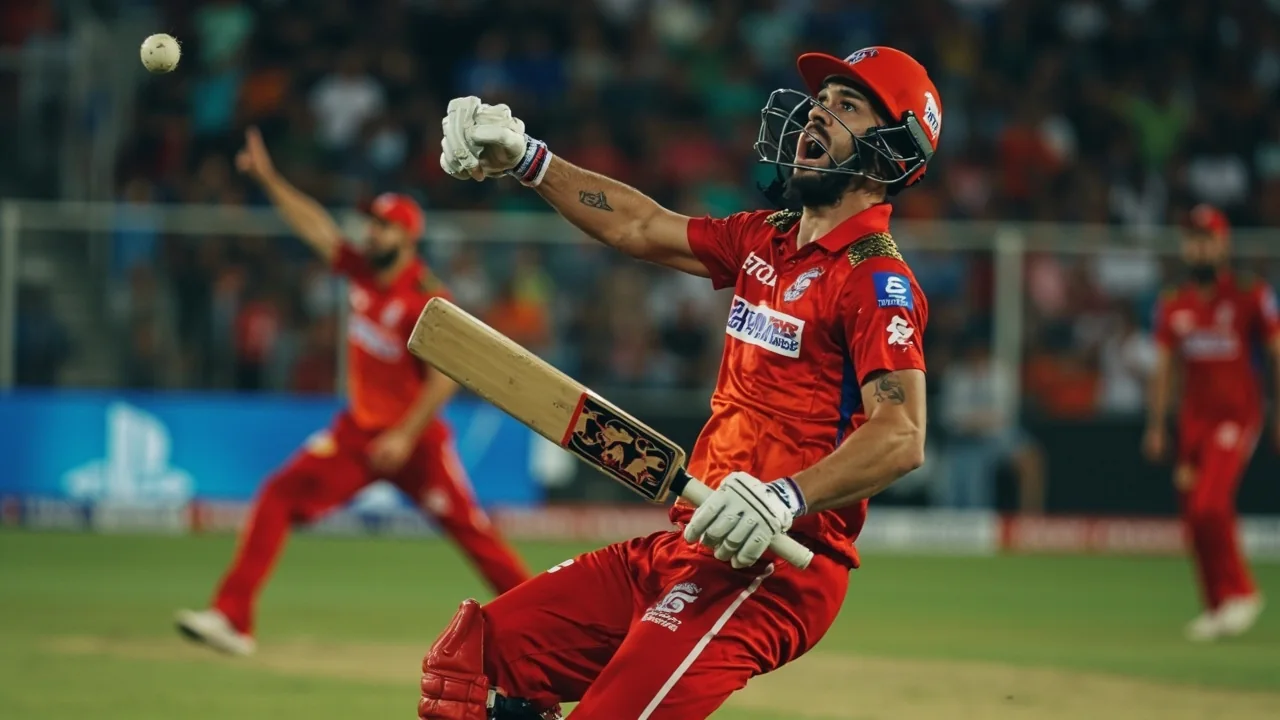
The cleanest way to read the captaincy brief is as a worked example of two different risk budgets. The small-league user is buying safety in numbers: the captain's tag goes to the highest-floor batter in the tournament, the vice-captain's tag to the second-highest-floor batter, and the rest of the XI is built around filling the role gaps. The grand-league user is buying rank differential: the captain's tag goes to the highest-ceiling player who will still be on 50% of slips, the vice-captain's tag goes to a differential whose 1.5x multiplier can carry a 25,000-entry contest in one innings.
Form matters less than the role. The Rohit Sharma of mid-2019 was the most-form batter in the tournament, but the captaincy call on him was not made because of his form. It was made because his role — opening the batting, batting through the innings, scoring in the V — was the role that survives a Headingley morning. Kohli at three was the same argument from the opposite end. The captaincy tag is a multiplier on role certainty, not on recent runs.
Expected points under captaincy are not symmetric. A 60-point expected score with a 2x multiplier is 120 points; a 60-point expected score with a 1x multiplier is 60 points. The captaincy tag is not a marginal upgrade; it is a categorical one. Users who treat the captaincy pick as a marginal upgrade are giving away the largest single source of variance in their lineup. CricTracker's split was, in that sense, a lesson in how to spend the upgrade — once on the floor, once on the ceiling — rather than spending it twice on the floor.
The framework transfers more cleanly than the names. Modern fantasy cricket apps still rely on the captain and vice-captain multiplier, and the competition structures still tilt the small-league versus grand-league trade in the same direction. The safer captain is the form batter in a role that survives the surface; the differential vice-captain is the young player whose recent ceiling has been high but whose ownership rate is still low. The framework is a 2019 framework, but the engine underneath it has not changed.
For readers who want to work the same logic on a current fixture, the broader fantasy cricket desk on Trust11 walks through the captaincy arithmetic for the active IPL, T20 World Cup and domestic windows, with the small-league and grand-league split kept separate on every match. The captaincy pick is the single largest lever in any fantasy lineup, and the lever is worth its own thinking time before every toss.
The CricTracker captaincy brief for the India vs Sri Lanka Headingley fixture was a clean read of the data at the moment of selection. Rohit Sharma and Virat Kohli were the two safest Indian batsmen in the tournament; Mohammed Shami was the most economical seamer; Hardik Pandya was the most versatile all-rounder; Kusal Perera and Avishka Fernando were the two Sri Lanka names with the highest upward mobility. The small-league call of Rohit captain and Kohli vice-captain cleared the cut-off. The grand-league call of Kohli captain and Fernando vice-captain climbed the rank chart. Both trades were defensible in their own contest, and the framework that produced them is the one that still governs Dream11 captaincy calls in 2026.
Reading the same brief six years on, the more useful question is not which call was right. The match had its own result, and the read was a pre-toss read. The useful question is which trade-off the next fixture is asking for — a 2x on the floor, a 1.5x on the ceiling, or some asymmetric blend of the two. The captaincy tag is too valuable to spend twice on the same arithmetic.
